Sint Eustatius
The Golden Rock - the small island with a big history

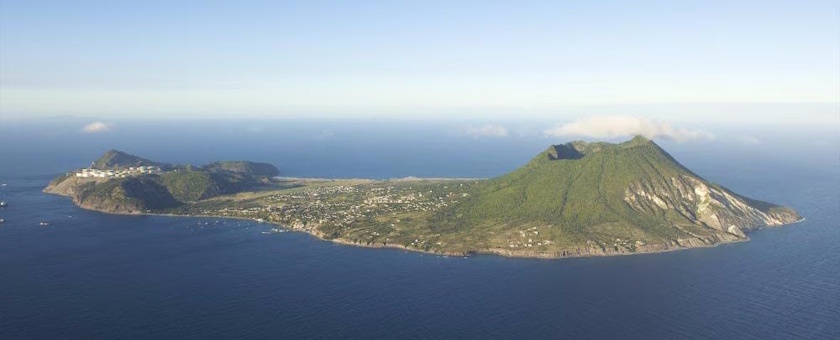
Sint Eustatius – the “Golden Rock” of the Caribbean
St. Eustatius, or Statia, as the English-speaking islanders call it, is not a crowded tourist island.
Unlike nearby Sint Maarten, where thousands of Dutch and American vacationers land every year, St. Eustatius has no large golden beaches.
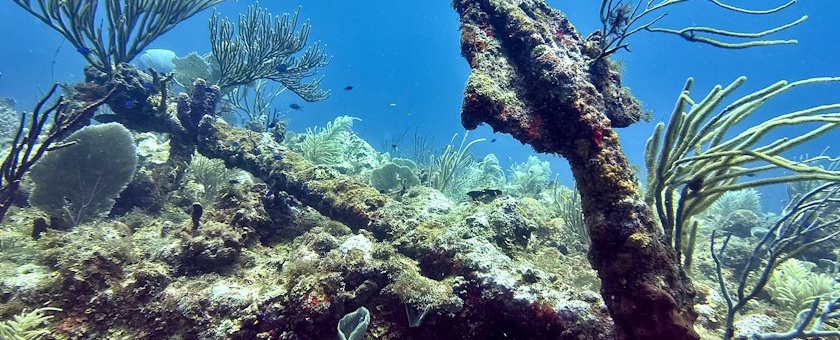
Still, the island is loved by scuba divers, who are drawn to the many shipwrecks in the surrounding sea.
Each wreck tells a story from the island's eventful past.
The history of St. Eustatius is closely tied to the history of the United States.
To understand that connection, you have to leave the lower part of the only town, Oranjestad (Orangetown), and climb up the Old Bay Path to the picturesque Upper Town, built on a cliff about forty meters above sea level.
That is where Fort Oranje stands, balancing right on the edge of the cliff.
Anyone stepping through the small gate into the fort immediately notices the huge flagpole in the center of the courtyard. At its base hangs a plaque that reads:
"In commemoration of the salute to the flag of the United States, fired in this fort on 16 November 1776 by order of Johannes de Graaff, Governor of Saint Eustatius, in reply to a national gun salute from the American brig-of-war Andrew Doria under Captain Isaiah Robinson of the Continental Navy. Here the sovereignty of the United States of America was first formally acknowledged to a national vessel by a foreign official. Presented by Franklin Delano Roosevelt, President of the United States of America."
Roosevelt presented this plaque in 1939 as a reminder that 'The First Salute' to the Andrew Doria made the Dutch Republic the first nation to officially recognize America's independence. That gun salute from Fort Oranje to the American ship Andrew Doria in 1776 was the final straw for Great Britain.
The British Revenge on St. Eustatius
In 1781, Great Britain struck back mercilessly. British Admiral George Rodney attacked St. Eustatius to shut down the profitable trade that had supplied both Americans and British enemies.
The attack was not just military, it was mostly an act of revenge and greed.
Within a few days, warehouses were looted, ships were seized, and trade goods like sugar, coffee, and cotton were sold off.
Even the personal belongings of residents and fleeing traders were stolen. Families lost their homes, fortunes, and freedom.
With that plunder, England brought a sudden end to the golden era of St. Eustatius.
The once bustling free port, the "Golden Rock" of the Caribbean, never fully recovered.
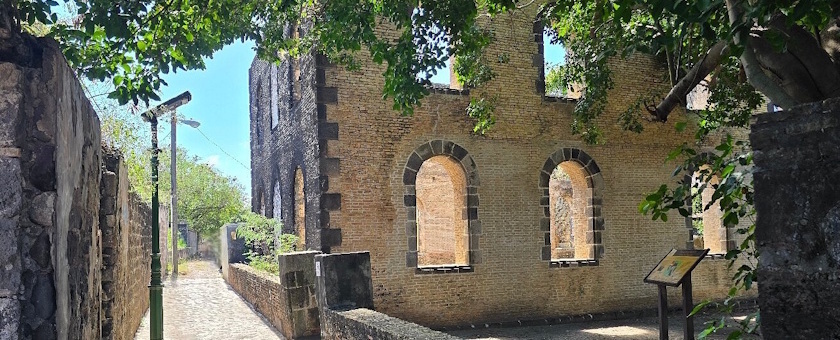
More than a century earlier, around 1660, Jewish families began settling on the island, helping to shape its trade. By the mid-18th century, they made up nearly half of all free residents and built the Honen Dalim synagogue, the heart of their community. They were active in shipping and trade through the island's many warehouses, helping St. Eustatius grow into a major trading center in the Caribbean. At the peak of this trade, St. Eustatius had hundreds of warehouses, and dozens to hundreds of ships visited the harbor every day. When Great Britain struck hard, many Jewish residents were captured or forced to flee, and the community disappeared within a few decades. In 2001, the walls of the synagogue, built from yellow bricks originally brought from the Netherlands, were restored. Today, the ruins of the synagogue and the old Jewish cemetery serve as reminders of the influential, enterprising community that once played a major role in life on the "Golden Rock."
As a free port, St. Eustatius played an important role in the transatlantic slave trade during the 17th and 18th centuries. African men, women, and children were brought to the island to work in agriculture, warehouses, and harbors, often under extremely harsh conditions. However, the island served mainly as a transit port, where people and goods were traded before being shipped to other parts of the Caribbean and North America. This history of slavery left deep scars on the population and the cultural heritage of St. Eustatius.
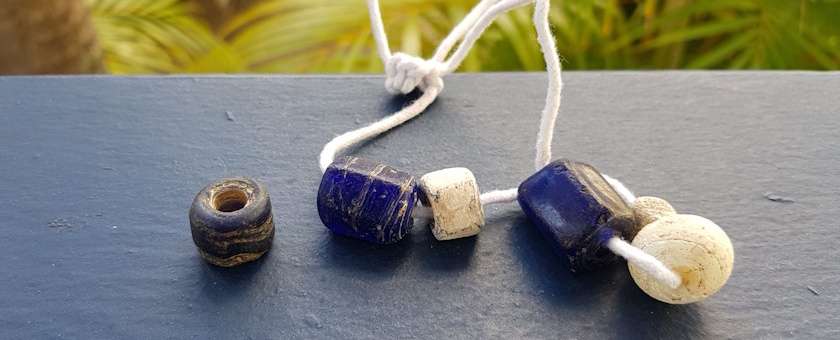
A physical reminder of this past are the blue slave beads. These glass beads were used as money in the slave trade, as well as for decoration or as lucky charms. According to local legend, enslaved people threw their beads into the sea on July 1, 1863, when slavery was abolished. Today, the beads are seen as physical reminders of the era of slavery and hold great symbolic and cultural value for the island.
Statia - Today
Today, St. Eustatius is a small community with just over 3,400 residents.
The Dutch government is the largest employer on the island. Tourism remains limited, even though the island deserves so much more recognition for its unique history.
Nearby Sint Maarten welcomes around 400,000 tourists every year, but expensive flights between the islands prevent many visitors from discovering the impressive shared history of the Netherlands and Statia.
St. Eustatius was part of the Netherlands Antilles until October 10, 2010. After the political changes, the island became a special municipality of the Netherlands, officially known as a Public Entity. Because the island was considered too small to run as an independent country, it received this special status within the Dutch system. Still, part of the population views this as a form of recolonization and would have preferred to keep more independence. A local referendum on this topic was dismissed by the Dutch government as not representative, but for many Statians, the question remains whether their voice was ever truly heard.