Bonaire
From the White Hell to a Diver's Paradise

Bonaire – From Ancient Sea to Tourist Island
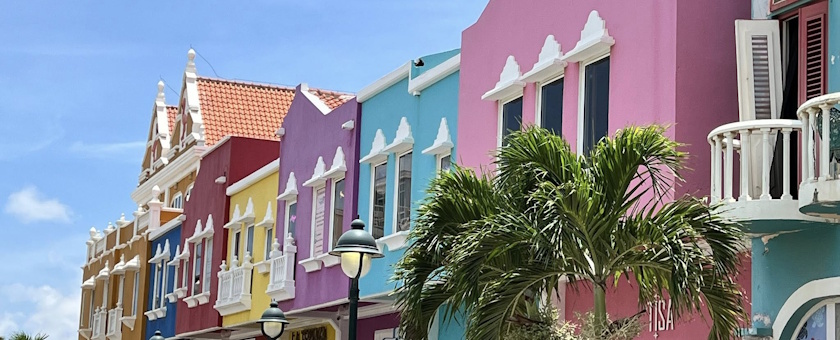
Bonaire and Curaçao sit right next to each other, yet they are completely different. Their capital cities show this clearly: Willemstad feels like the capital of a small country – which Curaçao is – while Kralendijk feels more like a cozy village. The people on both islands are friendly and helpful, but the pace of life on Bonaire is much slower.
Origin and Nature
Millions of years ago, Bonaire was formed when Earth's tectonic plates collided. Part of the seabed was pushed upward and slowly turned into land. The island is made partly of ancient volcanic rock and partly of limestone formed from coral. The first inhabitants were South American Indigenous people who lived on fish and shellfish. Later, the Caiquetío came, settled on the island, and started farming.
Spanish Era
In 1499, the Spaniard Alonso de Ojeda became the first European to set foot on the island. Because they found no gold or fertile soil, the Spaniards called Bonaire, along with the other Leeward Islands, "useless islands." Most of the Indigenous people were taken away to work on other islands.
Dutch Era and Colonial Role
In 1568, the Eighty Years' War broke out between Spain and the Netherlands, including at sea. The Dutch outsourced the naval battles to the Dutch West India Company (WIC). Salt was essential for preserving food on board ships, and Curaçao turned out to be perfect: it had salt pans, a natural harbor, enough drinking water, and meat. In 1634, Johan van Walbeeck captured the island from the Spaniards. Fearing a Spanish counterattack, the WIC also occupied Aruba and Bonaire in 1636.
On Bonaire, salt pans were discovered, and the island was set up as a plantation. Hundreds of enslaved Africans worked under harsh conditions, especially in salt harvesting. The work was so severe that Bonaire earned the nickname "the White Hell". Enslaved workers suffered painful wounds from the salt, went blind from the blinding sun, and had to spend their nights in wet clothes under the stars. The average lifespan of an enslaved person was four to seven years.
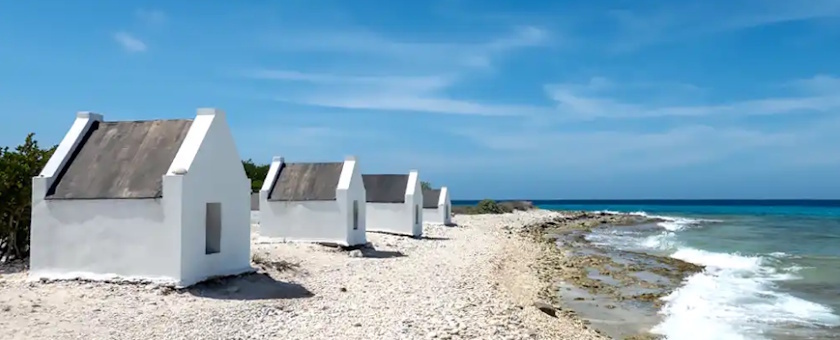
After the WIC went bankrupt in 1791, Bonaire came under the control of the Dutch State, led by the States General. Local governors handled daily affairs. In 1814, the slave trade was banned, but slavery itself continued. Children born to enslaved mothers were automatically considered slaves, a practice known as slave breeding. In 1850, small slave huts were built to show the outside world that enslaved people were treated well. In reality, this was a misleading picture. Slavery was finally abolished on Bonaire on July 1, 1863. Many former slaves stayed on the island and formed the foundation of today's Bonairean community.
The White Gold of Bonaire
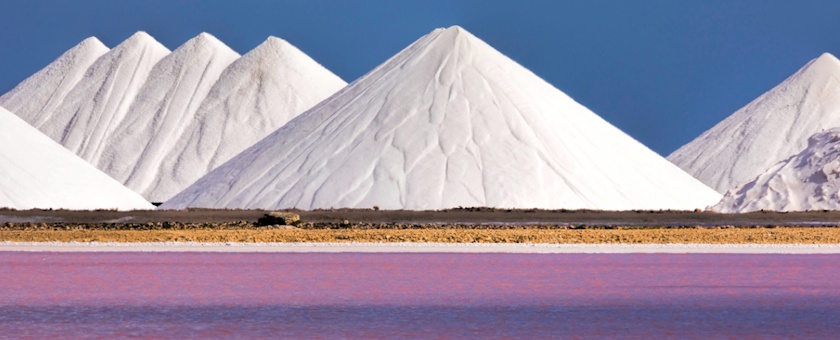
For centuries, salt remained Bonaire's most important product. Shallow salt lakes sit in the south, where seawater evaporates naturally in the sun. What stays behind is a thick layer of salt. During the era of slavery, this heavy work was done entirely by hand. Today, the salt is harvested by modern machines owned by the American company Cargill, which produces around 400,000 tons every year. The salt is used for road de-icing and water softeners, among other things. The pink salt pans and mountains of white salt are a familiar view on Bonaire today, serving as a symbol of the island's past and its strength.
The Kingdom and the Charter ('Statuut')
In the 19th century, during the Napoleonic Wars, the British temporarily took over the Dutch colonies. After the Treaty of London in 1814, the colonies returned to the Netherlands. In 1815, the Netherlands officially became a kingdom. Following the independence of Indonesia in 1949, new agreements were made with the remaining colonies. This led to the Charter for the Kingdom of the Netherlands in 1954 and the founding of the Netherlands Antilles. In 1986, Aruba became the first island to gain a Special Status, becoming an independent country within the Kingdom. Later, in 2010, Curaçao and Sint Maarten also became autonomous countries. Bonaire, Saba, and Sint Eustatius were considered too small to function independently and were given a special status as special municipalities of the Netherlands.
Tourism and Modern Bonaire
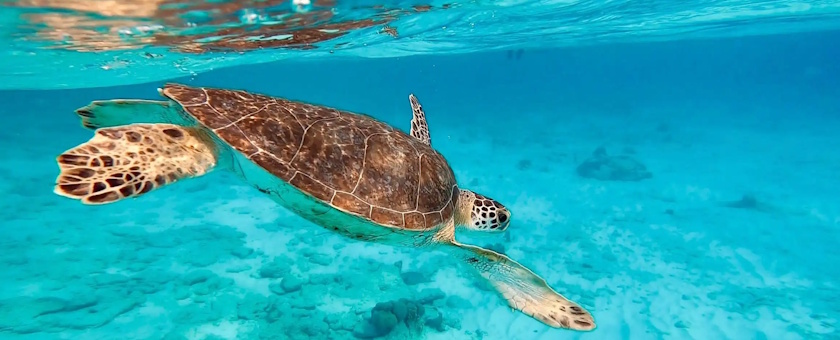
Today, Bonaire's economy relies mostly on tourism. Thousands of people visit every year to enjoy the peace, sun, and nature. Bonaire is famous for its stunning underwater world and is called "Diver's Paradise" for good reason. Anyone who dives or snorkels steps into a world full of colorful coral, tropical fish, and sometimes sea turtles. Just off the coast lies the small, uninhabited island of Klein Bonaire, less than a kilometer from Kralendijk. It is part of a protected nature reserve and is famous for its clear water, white beaches, and great dive spots. Sea turtles and birds also nest there, making it an important place for nature. Many visitors take a day trip there to fully relax.
In the quiet north sits Rincon, the oldest village on the island. Tucked away safely in a valley, the village was hard to see from the sea in the past, offering protection from pirates. Rincon is filled with history and tradition, complete with colorful festivals and old customs. It is often called the cultural heart of Bonaire. The capital city, Kralendijk, is a friendly town with brightly colored buildings and a lively boulevard. Together with the relaxed atmosphere, this makes Bonaire a place where life seems to move just a little slower, and where everyone can enjoy the sun, sea, and history.