40 Years of Status Aparte: Aruba's Unique Path
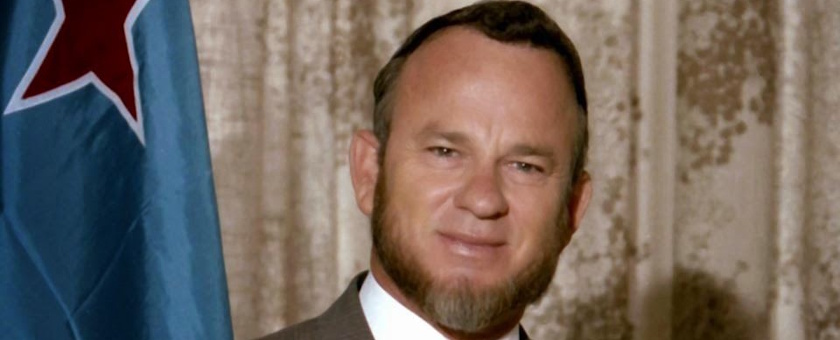
The legacy of Betico Croes

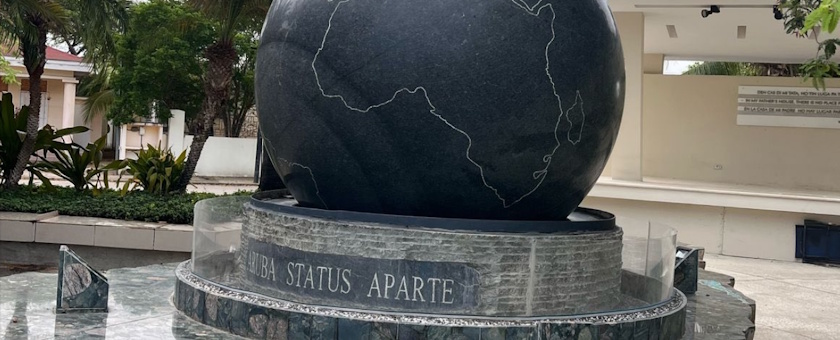
40 Years of Status Aparte
During my time as a member of the Dutch House of Representatives, I had the privilege of visiting several Caribbean parts of our Kingdom and meeting many fascinating people.
Sadly, Aruba was the only one I never visited, even though it is the most mature Caribbean island in our Kingdom. Aruba gained its Status Aparte back in 1986, almost forty years ago.
Status Aparte means a special, separate position within a larger whole.
It describes a country within a kingdom that is not fully independent, but is also not an integral part of the main state.
Originally, the term applied specifically to Aruba, which received this status in 1986 as a self-governing country within the Kingdom of the Netherlands, separate from the Netherlands Antilles.
The driving force behind Aruba's self-governing status was Gilberto François "Betico" Croes, a crucial Aruban politician and champion of freedom and self-determination.
Many Arubans see him as the father of the nation (Padri di e Patria) or the liberator of Aruba (Libertador di Aruba).
Tragically, on New Year's Eve in 1985, just one day before the Status Aparte officially began, he was involved in a car crash and fell into a coma.
As a result, he never got to consciously experience the official start of the Status Aparte.
He passed away more than eleven months later in a Dutch hospital without ever regaining consciousness.
His birthday, January 25, remains a national holiday in Aruba (Dia di Betico).
Because of these remarkable circumstances, rumors and conspiracy theories have always surrounded his death, ranging from murder and sabotage to suicide.
Political rivalries in Aruba were extremely intense at the time. Even today, forty years later, the rivalry between the AVP and the MEP, the two main political parties in Aruba, is still strong.
People now talk and write about "40 years of Status Aparte", but is that actually accurate, given that Curaçao and Sint Maarten also became self-governing countries within the Kingdom on 10-10-10 following Aruba's example?
The term "Status Aparte" was created specifically for Aruba and should still be seen as unique to Aruba today.
Aruba received a Status Aparte in 1986.
Curaçao and Sint Maarten did not get a Status Aparte in 2010; instead, they received a new country status after the dismantling of the Netherlands Antilles.
When Aruba became self-governing, the original agreement was that the island would become completely independent after a ten-year trial period.
This condition was later removed from the Kingdom Charter, called "Het Statuut", at Aruba's own request for economic reasons.
Even though there are now three self-governing islands, Aruba's status still feels different.
It did not result from breaking up the Antilles, but from a struggle for independence driven by its own people.
Aruba showed that an island could win a special status on its own through political struggle and negotiation.
Because I have never visited the island myself, I felt somewhat disconnected from Aruba and its people. But after reading into the history of the Status Aparte, I must admit that both the history of Aruba and that of Betico Croes are truly inspiring. Perhaps one day I will go to Aruba to see it for myself and experience how special Betico's legacy really is.