Suriname: 50 Years of Independence
November 25, 1975 – November 25, 2025

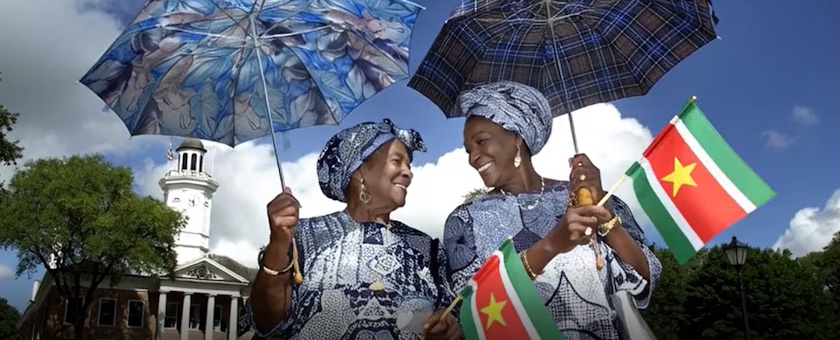
The Charter: Autonomy Within the Kingdom (1954–1975)
In the 1970s, most people in Suriname were still hesitant about full independence. Since 1954, Suriname already had a large amount of self-rule within the Kingdom of the Netherlands, written down in the Charter for the Kingdom (locally referred to as the 'Statuut').
This Charter made Suriname, the Netherlands, and the Netherlands Antilles three equal countries within one kingdom. Each country had its own government, parliament, and court system, and was completely in charge of its own internal affairs. Only defense and foreign affairs remained shared matters, where the Netherlands had the final say. So, Suriname was explicitly listed as an autonomous country in the 'Statuut', just like Aruba, Curaçao, and Sint Maarten are today.
The Choice for Full Sovereignty
That position of self-rule is almost identical to the current status of the three Caribbean countries within the Kingdom. However, Suriname was the only one that decided to leave the 'Statuut' in 1975 and choose full independence. On November 25, 1975, that independence became a fact. The Charter no longer applied to Suriname, and the Netherlands provided 3.5 billion guilders in development aid, along with new direct agreements about defense and diplomacy.
A Country of Great Ethnic Diversity
Suriname was and remains one of the most ethnically diverse countries in the world. Creoles, Hindustanis, Javanese, Maroons, and Indigenous peoples differ greatly in language, religion, and culture. A shared national identity was often missing. This led to tensions and power differences, which became a major source of division, especially around the time of independence.
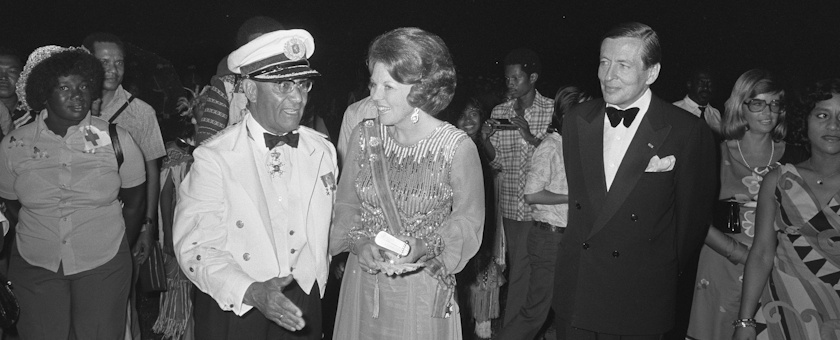
The Road to 1975 and the Wave of Migration
In 1974, Prime Minister Henck Arron announced that Suriname would become independent by the end of 1975 at the latest. This announcement caused great concern. Tens of thousands of Surinamese people, especially young people, students, and highly educated individuals, left for the Netherlands: around 40,000 in 1975 alone, and tens of thousands more up until 1980.
The Netherlands was completely taken by surprise in 1975 by the sudden arrival of tens of thousands of Surinamese people. There was no shelter plan; migrants ended up staying in military barracks and boarding houses. Society responded with tension and discrimination. Housing associations tried to control the influx through a spreading policy (a maximum of one Surinamese family per building entrance). It was not until 1980 that a visa requirement was introduced. Looking back, this period is seen as a painful chapter of institutional racism, despite the relatively quick integration of many Surinamese people.
From Bouterse to a New Generation
After 1975, the Netherlands kept its distance politically. On February 25, 1980, Sergeant Desi Bouterse and sixteen non-commissioned officers carried out a coup and took power. In December 1982, fifteen opponents of the military regime were executed (the December Murders). These events caused deep division and fear in society, led to a new wave of migration, and prompted the Netherlands to suspend development aid. In 1986, Ronnie Brunswijk, initially a trusted associate of Bouterse, broke ties with him and founded the Jungle Commando.
This led to the Interior War (1986–1992), a violent conflict that mainly affected the inland regions. After the 1992 peace agreement, Brunswijk entered politics and became vice president in 2020, and again in 2025.
Bouterse founded the NDP party in 1987 and remained a major political figure for decades. He served as president from 2010 to 2020; until his death in 2024, he remained influential, even though he was a fugitive after being sentenced to 20 years in prison for the December Murders (a final ruling in 2023). He passed away on December 23, 2024, due to complications following a short illness. In 2025, Jennifer Geerlings-Simons became president. The NDP won 20 seats and formed a coalition.
Looking to the Future
On November 25, 2025, exactly 50 years after independence, large oil reserves lie off the coast that could generate significant income. Whether Suriname can actually make good use of this opportunity depends heavily on good governance and honesty. Transparency International has scored Suriname around 40 on a scale from 0 to 100 for years; scores below 50 are considered problematic internationally.
Concerns about corruption and weak oversight are real, but those are issues for later. For now, the celebration comes first: happy Srefidensi Dey!